Laser Piles Treatment
Minimally invasive laser treatment for piles or haemorrhoids, planned after examination, symptom review and clinical suitability.
Laser Piles Treatment
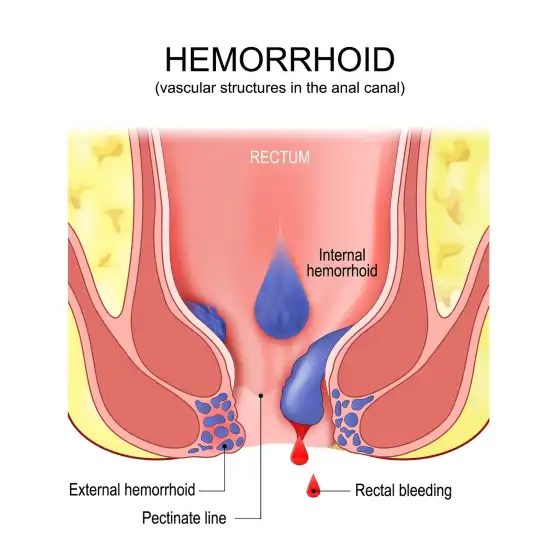
Piles, also called haemorrhoids, are swollen blood vessels around the anus or lower rectum. They may cause bleeding during stool, pain, swelling, itching, mucus discharge or discomfort while sitting or passing motion.
Laser piles treatment is a modern option for selected patients where laser energy is used to treat haemorrhoidal tissue with precision. Dr. Hardik Shah plans treatment after examining the patient, understanding symptoms and assessing the grade of piles.
- Bleeding while passing stool or blood seen in the toilet
- Pain, swelling, itching or a lump near the anal area
- Constipation, straining or repeated discomfort during motion
- Piles symptoms that keep returning despite medicines or home care
Careful evaluation before laser piles treatment
Laser treatment is planned after confirming the type, grade and severity of piles, along with the patient’s bowel habits and overall health.
- Review of bleeding history, pain, swelling, constipation and lifestyle factors.
- Clinical examination to assess the grade of piles and associated anal conditions.
- Discussion of medicines, diet, hydration, stool habits and previous treatments.
- Assessment of whether laser piles treatment or another treatment option is more suitable.
How laser piles treatment is performed
Laser piles treatment is usually performed under appropriate anaesthesia, using focused laser energy to treat haemorrhoidal tissue with minimal cutting in suitable cases.
- Laser energy is applied to shrink or seal the haemorrhoidal tissue with precision.
- The procedure usually involves less cutting and less bleeding compared to conventional surgery, depending on the case.
- The aim is to reduce piles symptoms while preserving surrounding healthy tissue as much as possible.
- The final treatment approach may vary based on the grade of piles, bleeding, swelling and clinical findings.
Recovery and follow-up
Recovery guidance is tailored to the operation, diagnosis and overall health. The care plan includes medicines, diet, activity, wound care and follow-up instructions.
- Soft diet, good hydration and fibre intake are advised to avoid constipation.
- Stool softeners, pain medicines or sitz bath may be advised as per recovery needs.
- Straining during motion, heavy lifting and long sitting should be avoided during early recovery.
- Fever, heavy bleeding, increasing pain, urinary difficulty or discharge should be reported promptly.
Treatment suitability, recovery time and procedure choice vary from patient to patient. Please consult the doctor for examination-based advice.