Hernia Surgery
Surgical repair for abdominal wall, groin and other hernias with open or laparoscopic options where suitable.
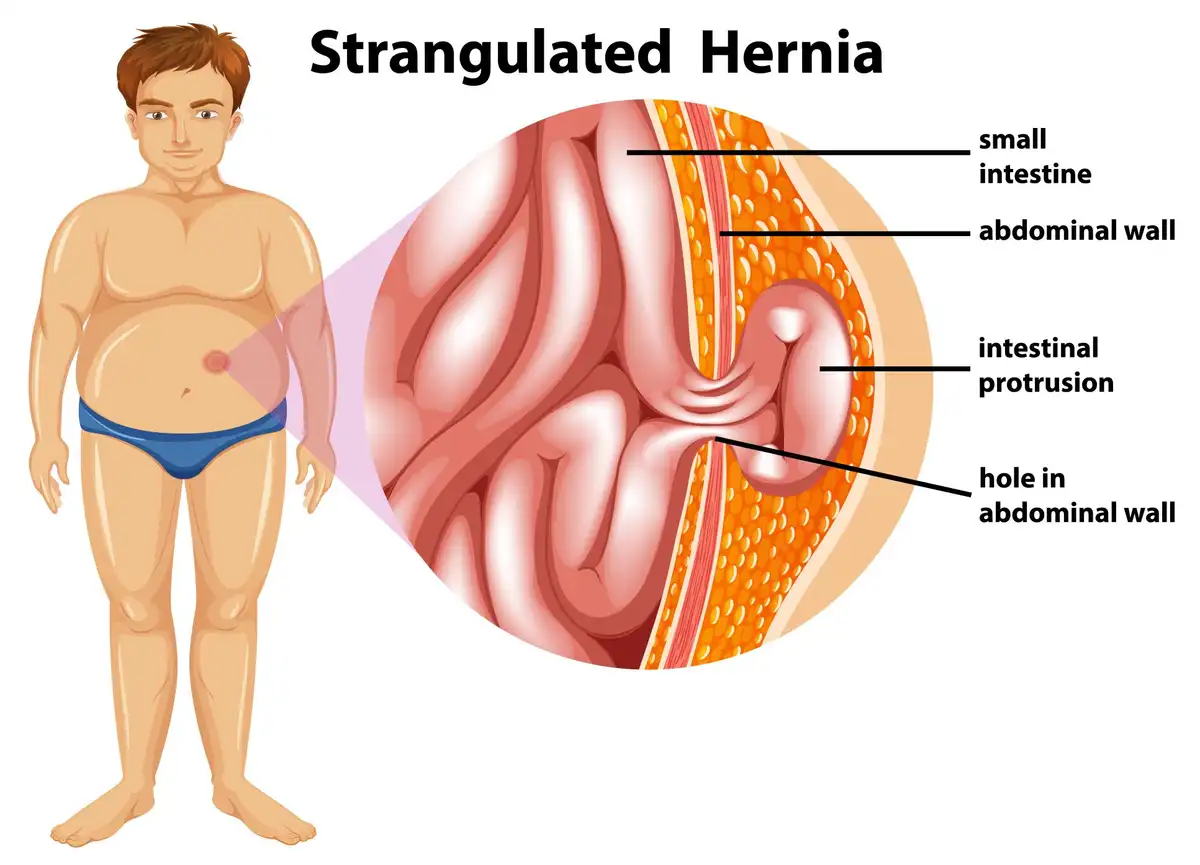
Hernia Surgery
A hernia occurs when tissue pushes through a weak area in the abdominal wall or nearby muscle layer. It may appear as a bulge that increases with coughing, standing or straining.
Hernia surgery is planned according to hernia type, size, symptoms, activity needs and overall health. Repair may be open or laparoscopic, often with mesh reinforcement when appropriate.
- Visible or felt bulge in the abdomen or groin
- Pain, heaviness or dragging sensation while standing
- Bulge that increases with cough, strain or lifting
- Bulge that becomes painful, stuck or cannot be pushed back
Planning for hernia surgery
A hernia repair plan is based on the hernia location, defect size, symptoms and any risk of obstruction or strangulation.
- Clinical examination to confirm hernia type and reducibility.
- Imaging review when the hernia is complex, recurrent or unclear.
- Discussion of open repair, laparoscopic repair and mesh use.
- Risk factor review including cough, constipation, weight and heavy lifting.
How hernia repair is performed
The goal of surgery is to return herniated tissue safely and reinforce the weak area to reduce recurrence risk.
- The hernia sac and defect are identified during surgery.
- Herniated tissue is reduced and the weakness is repaired.
- Mesh reinforcement may be used depending on hernia type and suitability.
- Activity restrictions and recurrence prevention are discussed after surgery.
Recovery and follow-up
Recovery guidance is tailored to the operation, diagnosis and overall health. The care plan includes medicines, diet, activity, wound care and follow-up instructions.
- Walking is encouraged early while heavy lifting is restricted.
- Constipation and cough control help protect the repair.
- Wound care, pain medicines and support garment advice are individualized.
- Sudden severe pain, vomiting or a stuck bulge needs urgent review.
Treatment suitability, recovery time and procedure choice vary from patient to patient. Please consult the doctor for examination-based advice.