Laser Fistula Treatment
Diagnosis-led treatment for anal fistula, planned after examination, infection assessment and fistula tract evaluation.
Laser Fistula Treatment
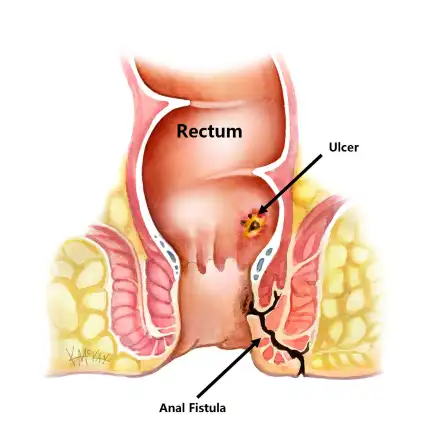
An anal fistula is an abnormal tunnel that forms between the anal canal and the skin near the anus. It may cause pus discharge, swelling, pain, itching, repeated boils or discomfort around the anal area.
Fistula treatment depends on the type, tract path, infection status and involvement of the anal sphincter muscles. Dr. Hardik Shah plans treatment after clinical examination and required investigations to choose a safe and suitable approach.
- Repeated pus discharge or fluid leakage near the anal opening
- Painful swelling, boil or abscess around the anus
- Itching, irritation or foul-smelling discharge from a small opening
- Fistula symptoms that keep recurring after medicines or drainage
Detailed evaluation before fistula treatment
Fistula treatment is planned after identifying the tract, checking for infection and understanding its relation with the anal sphincter muscles.
- Review of pain, pus discharge, swelling, fever and previous abscess history.
- Clinical examination to identify the external opening and suspected fistula tract.
- Imaging such as MRI fistulogram or sonography may be advised when needed.
- Discussion of fistula type, treatment options, recurrence risk and sphincter safety.
How fistula treatment is performed
The treatment approach depends on whether the fistula is simple, complex, infected or close to the sphincter muscles.
- Simple fistulas may be treated by opening and cleaning the tract when clinically suitable.
- Laser or minimally invasive fistula treatment may be considered in selected cases.
- Complex fistulas may need staged treatment, seton placement or sphincter-preserving techniques.
- Active infection or abscess may need drainage before definitive fistula treatment is planned.
Recovery and follow-up
Recovery guidance is tailored to the operation, diagnosis and overall health. The care plan includes medicines, diet, activity, wound care and follow-up instructions.
- Wound care, dressing guidance and hygiene instructions are explained after the procedure.
- Sitz bath, medicines and pain control may be advised as per recovery needs.
- Follow-up visits are important to monitor healing and detect recurrence early.
- Fever, increasing pain, heavy bleeding, swelling or foul discharge should be reported promptly.
Treatment suitability, recovery time and procedure choice vary from patient to patient. Please consult the doctor for examination-based advice.