Circumcision Surgery
Safe and planned circumcision surgery for children or adults, advised after examination, diagnosis and clinical suitability.
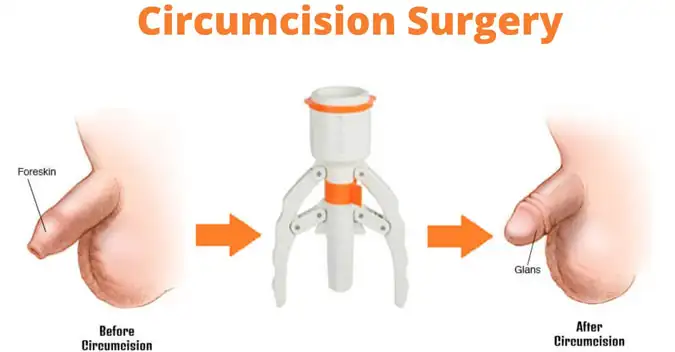
Circumcision Surgery
Circumcision is a surgical procedure in which the foreskin covering the head of the penis is removed. It may be advised for medical reasons such as phimosis, recurrent infection, balanitis, paraphimosis or repeated difficulty in foreskin retraction.
Circumcision surgery is planned after understanding the patient’s symptoms, age, hygiene concerns, infection history and overall health. Dr. Hardik Shah explains the suitable treatment approach, anaesthesia, recovery care and precautions before the procedure.
- Tight foreskin that cannot be pulled back comfortably
- Pain, swelling, redness or repeated infection around the foreskin
- Difficulty passing urine due to tight foreskin or ballooning during urination
- Foreskin stuck behind the head of the penis or recurrent hygiene-related problems
Careful evaluation before circumcision surgery
Circumcision is planned after assessing the reason for surgery, local infection, foreskin tightness and the patient’s fitness for the procedure.
- Review of symptoms such as tight foreskin, pain, swelling, urinary difficulty or repeated infection.
- Clinical examination to assess phimosis, balanitis, paraphimosis or other foreskin-related conditions.
- Discussion of age, hygiene, medicines, medical history and anaesthesia suitability.
- Explanation of the procedure, expected healing time, wound care and activity precautions.
How circumcision surgery is performed
Circumcision is usually performed under appropriate anaesthesia using a suitable surgical method based on the patient’s age, condition and clinical findings.
- The foreskin is carefully removed to expose the head of the penis safely.
- Bleeding is controlled during the procedure and the wound is closed or managed as per the selected technique.
- Laser, stapler or conventional circumcision methods may be considered where clinically suitable.
- The treatment approach is selected after examination, keeping safety, healing and patient comfort in mind.
Recovery and follow-up
Recovery guidance is tailored to the operation, diagnosis and overall health. The care plan includes medicines, diet, activity, wound care and follow-up instructions.
- Medicines, local hygiene and wound care instructions should be followed as advised.
- Mild swelling, sensitivity or discomfort may occur for a few days and usually improves gradually.
- Tight clothing, friction, heavy activity and sexual activity should be avoided until advised by the doctor.
- Increasing pain, fever, bleeding, pus discharge, urinary difficulty or worsening swelling should be reported promptly.
Treatment suitability, recovery time and procedure choice vary from patient to patient. Please consult the doctor for examination-based advice.