Umbilical Hernia
Treatment planning for navel hernias that cause swelling, discomfort or progressive enlargement.
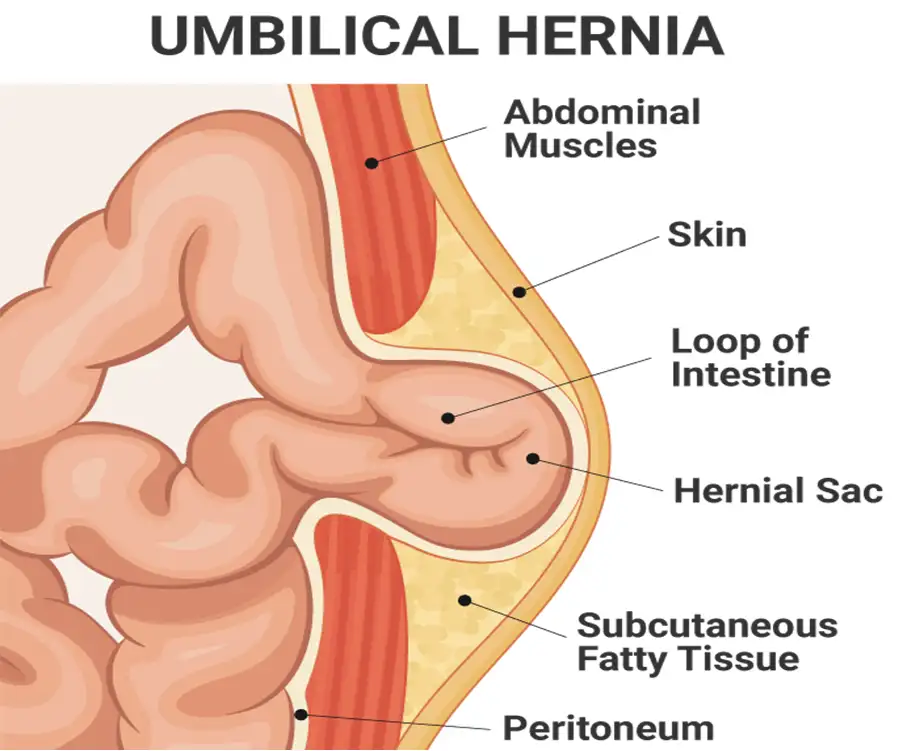
Umbilical Hernia
Umbilical hernia appears as a swelling at or near the navel. It may be more visible when coughing, standing, straining or lifting.
Surgery is considered when the hernia is symptomatic, enlarging, cosmetically concerning or at risk of trapping tissue. Repair is tailored to the defect size and patient factors.
- Bulge or swelling around the navel
- Navel pain or discomfort while coughing or straining
- Increasing size over months or years
- Painful swelling that cannot be pushed back
Planning for umbilical hernia repair
Repair planning considers the size of the navel defect, symptoms, body weight, pregnancy history and activity needs.
- Examination to confirm defect size and reducibility.
- Imaging review if the hernia is unclear, large or recurrent.
- Discussion of suture repair, mesh repair or laparoscopic options.
- Guidance on cough, constipation and weight-related recurrence risks.
How umbilical hernia is repaired
The repair strengthens the weak navel area and reduces the risk of the hernia returning.
- Hernia contents are reduced safely into the abdomen.
- The defect is closed or reinforced based on size and suitability.
- Mesh may be advised for larger or higher-risk hernias.
- Cosmetic appearance around the navel is considered during planning.
Recovery and follow-up
Recovery guidance is tailored to the operation, diagnosis and overall health. The care plan includes medicines, diet, activity, wound care and follow-up instructions.
- Keep the wound clean and dry as instructed.
- Avoid lifting and straining until cleared by the doctor.
- Prevent constipation with diet, fluids and medicines if prescribed.
- Increasing redness, discharge or severe pain should be reported.
Treatment suitability, recovery time and procedure choice vary from patient to patient. Please consult the doctor for examination-based advice.