Groin Hernia
Evaluation and repair for inguinal and femoral hernias that cause groin bulge, pain or heaviness.
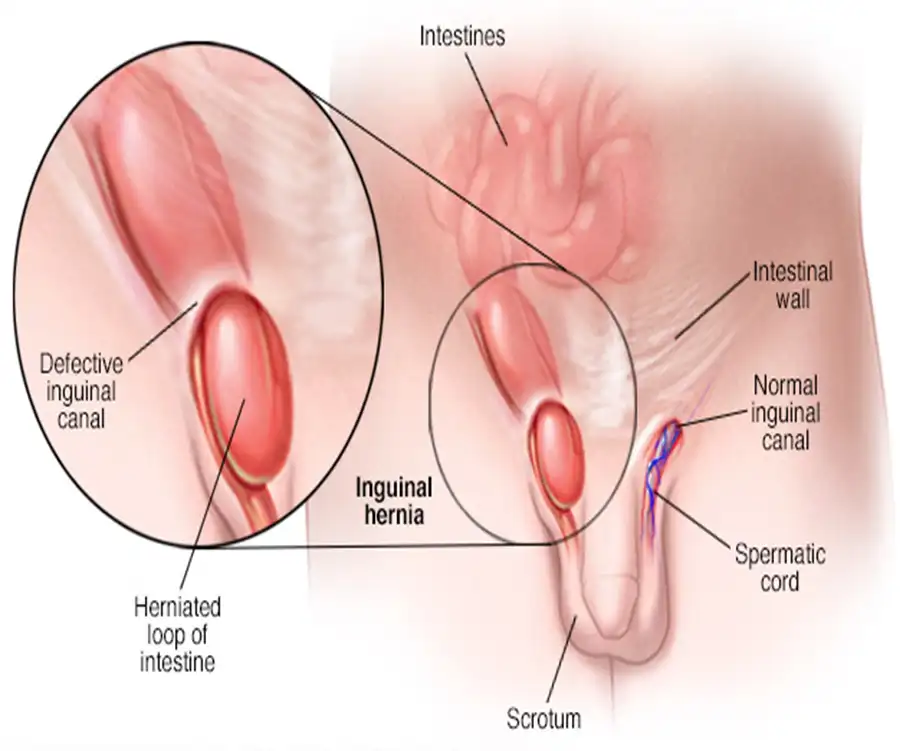
Groin Hernia
Groin hernia usually appears as a bulge in the groin that becomes more noticeable with standing, coughing, exercise or lifting.
Inguinal and femoral hernias can enlarge over time and may rarely become stuck or obstructed. Surgical repair is planned according to hernia type, symptoms and patient fitness.
- Groin bulge that appears on standing or coughing
- Groin pain, heaviness or dragging sensation
- Swelling extending toward the scrotum in men
- Painful bulge that becomes stuck or associated with vomiting
Planning for groin hernia repair
Groin hernia treatment starts with examination to identify hernia type, side, reducibility and warning signs.
- Examination while standing, coughing and lying down.
- Assessment for one-sided, both-sided or recurrent hernia.
- Discussion of open versus laparoscopic repair where suitable.
- Review of work, exercise and lifting needs before surgery.
How groin hernia is repaired
Repair closes or reinforces the weak groin area so the hernia does not keep protruding.
- The hernia sac is identified and reduced safely.
- The groin weakness is repaired, commonly with mesh reinforcement.
- Laparoscopic repair may be considered for selected cases, including both-sided hernias.
- Emergency care is needed if the hernia becomes painful and irreducible.
Recovery and follow-up
Recovery guidance is tailored to the operation, diagnosis and overall health. The care plan includes medicines, diet, activity, wound care and follow-up instructions.
- Walking is usually started early as advised.
- Heavy lifting and strenuous exercise are restricted for a defined period.
- Support, pain control and wound care instructions are explained.
- New swelling, fever or increasing groin pain should be reviewed.
Treatment suitability, recovery time and procedure choice vary from patient to patient. Please consult the doctor for examination-based advice.